Monday, September 15, 2014

Hindering the Potency of the Lord's Word

On the heals of Gideon's call narrative comes of the more perplexing episodes in all of Judges (at least in my opinion). Judges 6:25-32 recounts Gideon's quasi-obedience to the Lord's command to desecrate a local pagan worship center. I say quasi-obedience because Gideon technically obeys the Lord and slaughter's his father's bull with pagan cultic elements as kindling, but he does so under the cover of darkness. And we know that Gideon's actions were less than ideal because the text states ויהי כאשׁר ירא את־בית אביו ואת־אנשׁי העיר מעשׂות יומם ויעשׂ לילה, "But because he feared the house of his father and the men of the city from doing it during the day, he did it at night." Yet the weirdness of the story begins to appear when one considers the turn of events that transpire at daybreak. The text tells us that the townsmen awake to find their altar demolished into a smoldering heap. Naturally, they make inquires and ultimately find that the son of the man who ran the site was culpable. Joash, however, is not willing to give up his son. In fact, he only responds cryptically, stating unequivocally that Baal can take care of himself and whoever attempts to seek justice on the deity's behalf will be killed (Judges 6:31).

Taken in context, Gideon is obviously still dealing with some things. That he accomplished the feat under the cover of darkness and in fear of the townspeople's' reaction clearly demonstrates that he lacked boldness and had resigned himself to fear. Joash, Gideon's father and apparent priest of the worship site just destroyed, interesting, fervently defends neither his son nor Baal. If anything, one can infer that Joash is beginning to change his mind as his allegiance to Baal is waning. Consequently, I am left with a few questions. Why does the text recount Joash's response this way? Why was Gideon so afraid? What is the purpose of this episode?

The critic inside me says that this episode is clearly an etiological episode that was preserved as a memory for how Gideon came to be known by the name Jerubbaal (6:32). Or perhaps, this episode appears to amalgamate once independent heroic traditions. However, such an explanation only goes so far, not to mention being a bit theologically shallow.

Context is key here, and I believe a theological payoff comes when one considers Gideon's lack of boldness. Quite simply, Gideon's fear and lack of boldness compromises the potency of the Word of the Lord. Remember, these actions of desecration were simultaneously intended to be Gideon's coming-out party and a vivid display of the Lord's supremacy over Israel's enemies and their gods. However, because Gideon's actions were preformed at night, there can be no clear statement about Yahweh's supremacy. There is only confusion about the capabilities of the foreign deity. When the spot light should have been on Yahweh, it was focused upon Joash and what he could make of the night's events. As my professor has so eloquently stated, "Gideon's fear...transformed what should have been a radical act of evangelism into simple vandalism in the eyes of the community" [Lawson Stone Judges [Cornerstone Bible Commentary; Carol Stream, IL: Tyndale House Publishers, 2012), 277].

Thursday, July 10, 2014

How Cynicism Gives Way


The book of Judges is a fascinating book, perhaps one of the most fascinating in the entire Old Testament. As one of my professors is fond of saying (or at least something to this effect), it presents the “Wild West” portion of Israel’s history. You see, it presents Israel during its formative stages, when it was just beginning to carve out a nitch for itself in the immediate aftermath of the Late Bronze Age Collapse—the period of ancient history that left the Levant with a massive power vacuum in light of Egypt’s forced retreat. Israel, the Philistines, the Midianites, and others were jockeying for position, and the book of Judges recounts this struggle, offering entertaining, enriching, and graphic accounts along the way.

Gideon is one the heroes recounted in Judges, and just like so many of them…boy was he rough around the edges. For the moment, let’s consider his calling to be a judge. Here are some notable observations.
·         When we first meet Gideon, he is at the bottom of a winepress threshing wheat. Now think about this for a second. Threshing wheat involves tossing harvested wheat into the air so that the chaff, or “bad stuff,” can be blow away by the wind. So, to do this properly, one naturally needs to be in a place where the wind is blowing, often at the top of a hill where wind flow is relatively constant. At the bottom of a winepress, there will not be much wind. So, is Gideon just incompetent? No, the text tells us that he is worried about Israel’s brutal oppressors, the Midianites. He is threshing wheat at the bottom of a wine-press because he is attempting to escape the Midianites (cf. 6:11). Apparently, every moment of the day presented another opportunity for a raid…Gideon and Israel were constantly looking over their shoulders.
·         This constant fear had harbored a sense of cynicism in Gideon that manifested itself in doubt and an inability to perceive the Lord’s relevance for him. The text tells us that the Angel of the Lord came to visit Gideon with the expressed purposing of calling him to be a judge, one who would save Israel from the Midianites (cf. 6:14). However, on two occasions, Gideon responds to his visitor and his message with a very cynical “Please my lord!” (בִּי אֲדֹנִי). Furthermore, Gideon is of the opinion that the Lord’s feats of old (i.e. the Exodus memories) were just memories…essentially a dead past. Gideon’s present circumstances had consumed and overwhelmed his worldview and confidence in the future.
·         Still apparently not fully understanding who his visitor really was, Gideon asks for a test. And boy is this kind of bizarre. First, he asks the visitor to stay, and he obliges. Then, goes home and prepares a feast. What is interesting is that the grammar leaves open the possibility that the feast was massive. There was meat, and soup, but did Gideon also use 22 liters of flower to make the bread? The grammar leaves open the possibility. If this was the case, was the test one of determining the man’s stomach size? I don’t know for sure, but what is for sure is that when the Angel of Lord responds by incinerating the feast and then disappears, Gideon freaks out…because he finally realizes who exactly he had been dealing with!
·         At this point (v. 22), Gideon responds with yet another interjection, but this one is of a very different tone. “Oh my Lord!” (אֲהָהּ אֲדֹנִי) He then proceeds to announce his shock that he saw the Angel of the Lord face to face and yet escaped death. Calming his fears though, the Lord pronounces peace and declares that there is no reason to fear for he will not die (cf. 6:23).

In many ways, the call narrative progresses around these three interjections, and therefore asks the reader to ponder Gideon’s change in attitude, at least the start of it (Remember, in chapter 7 Gideon will ask for more signs). What began to knock down his cynicism? What caused him to curb his cynical doubting and be open to the reality that God could, in fact, use him as a savior? The answer suggested by the text was a personal encounter with God. It took one dramatic encounter for Gideon’s cynicism to erode.

It is absolutely critical that our fears, doubts, and frustrations in any circumstance do not mature to conceive an attitude of cynicism that openly doubts, perhaps even mocks, the desired actions and perceived effectiveness of God Almighty. Nevertheless, if one has gotten to that point, know that it does not have to be the final word. The reality is that God’s celebrated actions are not mere memories restricted to the past with no relevance for our present or future. All it takes in one encounter to realize this anew. Consequently, this is one of the reasons why Christian communities meet regularly, fellowship, and testify. It is for the people, at least in part, who find themselves at the bottom of a winepress futilely attempting to thresh wheat.

Wednesday, July 9, 2014

Satan in Job

"Christian readers readily identify the adversary [in the book of Job] as a known character whose profile is provided by the New Testament. But we cannot be so hasty. "Satan" here is a function, not a personal name. This is particularly important here, for this satan is portrayed neither as an independently volitional being or as diabolical. He is among the "sons of God," the members of the heavenly council, and he operates only as a subordinate. By permitting this adversary's course of action, God is allowing Job's case to stand as a test case for his policies. One can hardly label this adversary as an embodiment of evil when he simply expresses doubt concerning God's policies, a doubt that God has prompted through his observations concerning Job.

"The role of the adversary is to provide the most important twist in the challenge against God's policies. Any human can contend that it is not a good policy for God to allow righteous people to suffer. This, of course, is Job's challenge. What is an innovation to this discussion is the contention of the adversary that it is not a good policy to bring prosperity to righteous people. When the adversary asks the rhetorical question of whether Job serves God for nothing, he in effect questions whether there is such a thing as disinterested righteousness. If righteousness is routinely rewarded, will not people behave righteously just to get rewarded? And if that is so, is there really such a thing as true righteousness? Does not the policy of rewarding the righteous actually inhibit true righteousness by turning presumed and even potentially righteous people into ethical mercenaries? One could only answer such questions by taking away the prosperity of some presumed righteous--the more righteous, the surer the test. The challenge then targets a policy (attributed to God) that is formulated as a principle of retribution: the righteous will prosper and the wicked will suffer. In this way the adversary provides one side to the challenge of God's policy...while Job provides the other side."

J. H. Walton, "Job1: Book of" in Dictionary of the Old Testament: Wisdom Poetry & Writings (eds. Trempre Longman III and Peter Enns; Downers Grove, IL: IVP Academic, 2008), 336-37

Tuesday, May 27, 2014

...and off they go....

I will never forget the day that I received one of the more disturbing phone calls in my life. On the other end of the line was my younger brother who disclosed that he had just discovered that his wife had been unfaithful. The pain was palpable. Over the next year or so, I watched my little brother descend into a terrible cycle of grief, anger, and depression. This ultimately rendered him a divorced man. It was hard to watch, but somehow I knew that it would not break him.

Back2Back MinistriesFast forward a few years to today. Again, I shared a phone call with him. However, the circumstances around this phone call were dramatically different. Today marks the beginning of his journey to India, with his wife, to help run an orphanage in Hyderbad with Back2Back ministries. I cannot help but feel a sense of pride for my younger brother. He is someone who has endured some real emotional pain. He is also someone who has relied on the grace of God to get him through that pain and transform him in the process.

I look forward to hearing about his next phase in life. Indeed, the mission field has changed since the days of William Carey. There is Twitter, Facebook,Skype, and Instagram, not to mention the internet. All of this translates into quicker and easier communication. Honestly, this will make the time that Mike is in India a little more bearable for myself and my family. However, some things do not change. God still calls his people to bear his witness to the ends of the earth. He still calls people to make that very uncomfortable break, to say goodbye to everything that is familiar and take up the burden of the cross.

Over the past few years, Mike has demonstrated a lot of maturity, particularly spiritual maturity. He has become aware of the calling placed upon his life. Most importantly, he has not failed to consider his wife, Courtney, in this whole process. Both are convinced that India is where they need to go for the next year or so. To that, I say "Amen."

My prayer is that Mike and Courtney continue to seek the Lord's favor for their lives. Discerning the Lord's favor is an interesting and potentially complicated thing. It involves constantly making decisions, and (re)evaluating decisions in light of developments in our lives and further revelation. In other words, our plans may be good and well intended, but if they are not God's plans, they do not matter much. At the end of the journey we may look back and say, "I never would have taken that route." Mike's journey, as I interpret it, manifests this principle, perhaps more than most. His intentions and plans for his life have always been good and well-intended, but he would not be the person he is today without some tough moments. 

Sunday, April 27, 2014

Defining Ourselves and Our Past

Today, my church started a new series called "defined." Naturally, the goal of the series is to discuss what defines us as Christians. I am intrigued to see where this sermon series will end up. It is my hope that we will eventually discuss the doctrinal issues that define us as Christians. Nevertheless, today the topic of discussion dealt with how, or if, our past defines us. More specifically, it discussed the role of guilt that follows any type of error or shortcoming. Guilt can be suffocating and crippling, locking us in a cycle devoid of hope. On the other hand, God can use guilt to motivate one to repentance and in time salvation. All of this is true.

As I sat there listening, I could not help but ponder the relationship between our guilt, our past, and what defines us. Does salvation from guilt translate to severing our present and future from our past? Are we, or should we, be "defined by our past?"

Ultimately, I came to the conclusion that we are, on one level, "defined by our past." I don't think our salvation from guilt and sin should be totally severed from our present and future. Our overcoming of guilt, our dealing with our past sins and shortcomings should not equal the rejection of our past. I believe that even a redeemed past "defines us." If our past is a part of "our story," and if "our story" largely defines us, then our past--no matter how egregious and scary is was--defines us, at least partially. Is this not the rationale behind giving a testimony?

The beauty of redemption is that it ensures that our past defines us in a controlled, qualified manner. On this side of redemption, our past never cripples us, and it certainly does not have the last word. However, if we are honest with ourselves, there is an irony in all of this. Every time we tell "our story," give our testimony, we relive the guilt and shortcomings of our past, and there is always the chance that it will cause more pain.

Now this is one of the reasons why I am a proponent of Wesleyan theology, with its emphasis upon the victory over sin and the effects of sin. You see, the redemptive and nourishing power of the Holy Spirit is so great, so powerful, that we do not have to live in fear that the guilt and errors of our past will once again consume us. Daily we allow the grace and power of the Holy Spirit to drive us onward, allowing our past to be a powerful testimony for the victorious power of the Spirit.

Wednesday, April 2, 2014

Noah, Context, and Why Evangelicals Should Not Get Upset

I will say up front that I have not seen the recent film adaptation of Noah by Darren Aronofsky, but I plan to...at some point. I will wait for it to come out on the Redbox probably. I mean, who can beat a 1 dollar movie rental? That has to be one of the greatest inventions of modern America.

I will also say up front I realize that there is a cacophony of voices weighing in on this topic. Therefore, my voice will probably be lost in the mix. Nevertheless, when my colleague John Barnts registered some thoughts on the subject of "context" for evaluating this film I decided to register my own opinion, knowing full well that it will be lost. In the spirit of John's words of advice (...and yes he is very perceptive when it comes to analyzing and evaluating films), I want to come at this from the context of hearing the director's own statements, for such a posture is critical when evaluating anyone's work.

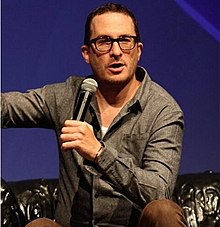
Darren Aronofsky GIFF 2013.jpegThe Washington Post put out an interview with Aronofsky, and you can read it here. In that interview I found a few things that were interesting.
  •  Aronofsky believes that the Noah narrative revolves largely around the tension between wickedness and forgiveness. So much so, Aronofsky wanted to "dramatize the decision God must have made when he decided to destroy all of humanity." An interesting component of this dramatization was a decision to embody this decision in the character of Noah. "We wanted to get that grief, that struggle, and stick it into Noah, so we can understand as people what it must have felt like." Honestly, I have no problems with this decision. The reality is that the Noah narrative gains its impact and appeal in the silence of Noah (count how many times Noah actually talks during the flood event...). Much like Genesis 22, the text wants us to ponder the dynamics of this event.
  • Aronofsky admits that the Ham/Noah relationship was a driving factor in the development of his screenplay. Speaking to the Ham/Noah/drunkenness episode that takes place after the flood, "To us that was a huge clue to their relationship. So we started to build a whole story out of that relationship between Noah and Ham and how they got there." I find this decision and method very interesting...and I am not sure what to make of it right now. One of my professors said that he thought Ham was "creepy" (or something like that). Regardless, the events at the conclusion of Gen 9 are....interesting. I think that Aronofsky has a legitimate leg to stand on here.
  • First and foremost Aronofsky sees himself as an entertainer, who seeks to entertain through exciting and emotional movies. 
In my mind, these points (as well as others, such Aronofsky's tendency to make dark and deeply symbolic movies) give one important insights into Aronofsky's intentions associated with making this movie. However, there is another variable that bears upon any Evangelical's evaluation of this movie--the text of the Bible. I have already mentioned the "silence of Noah" throughout the flood episode, a silence that breeds questions. In addition, there is a peculiar bracket that appears around the flood narrative. In Gen 6:5, the text says that God realized that "every inclination of the thoughts of their hearts was only evil continually" (NRSV). In Gen 8:21, the Lord proclaims that he will never curse the ground again, "for the inclination of the human heart is evil from youth" (NRSV). So, we have this recurrence that brackets the flood event under the realization that the inclination of the human heart is evil.

But wait...what?! There is a recognition that humanity is depraved, then the flood (which is supposed to somehow rectify the situation), and then a re-acknowledgement of the same reality of human depravity...what does this mean? It means that the biblical text is recognizing that humanity's depravity continues, and it continues to exist alongside a gracious God. Perhaps these are the things that Aronofsky noticed when he grew up with the Noah story (...he grew up in a Jewish home...), the things that drove him to emphasize the themes of justice vs. mercy, good vs. evil, and what it means to be human.

I realize that as an Evangelical there is a innate reaction to put up a fight against anyone who appears to be challenging the biblical text. I get it. However, in this instance, this is a man who has used the contours of the text for his purposes, and those purposes are creative and for entertainment. In other words, based on what I have heard him say and my understanding of the demands of the text, I do not think that he is "challenging  or rewriting the Bible." [...and yes, perhaps my opinion will change when I watch the movie. However, I doubt it based upon some reviews by people that are more intelligent, perceptive, and theologically aware than me.]. So, lets not get too upset...

Friday, March 21, 2014

The Generational Issue

LGBT pride flagAbout two weeks ago, I attended the annual SECSOR (Southeastern Conference for the Study of Religion) conference in Atlanta, GA. As I waited to present my paper, I listened to an individual present on the difficulties for LGBT (Lesbian, Gay, Bi-sexual, and Transgender) advocates in reading Lev. 18:22 and 20:13. To sum up the argument presented, these passages are descriptive of a specific action and prohibition, and because these passages are restricted by their socio-historical context and fail to resonate with a contemporary understanding of homosexuality, these prohibitions are not immediately applicable to contemporary culture. Subsequent to this paper, I overheard a group of young aspiring scholars discussing the ascending prominence of LGBT churches. Their positions were clear. They understood this ascendance to be a good thing and they were excited about the developments of the future.
It has been said before, but it is worth repeating—the issue of LGBT inclusion (whatever this means…consequently it is a discussion for another place and another time) is the theological issue for my generation (at least as things currently stand). Indeed, it has already influenced mainline denominations, and so what I say here is nothing new or groundbreaking. [For example, see my colleague MattO’Reilly’s conversations with the United Methodist Church. The reality is that there are many people who are more intelligent and more theologically astute than me that have already weighed in on this topic.] However, stemming from that weekend I am more convinced than ever that this issue will transcend mainline denominations. The issue is at the forefront of the media, and it will only gain further ground as the topic fits within the framework of the cultural movements of political correctness and anti-discrimination. For any denomination not to address it will essentially indict it of theological "duck and cover."
Fundamental to this discussion is a determination of Scriptural dynamics. In the case of the paper that I heard, the prohibitions of Leviticus are 1) restricted and 2) fail to consider a contemporary understanding of homosexuality. Thus, while not explicitly stated by the presenter, Scripture’s relevance on this topic ostensibly can only be discerned after a historical meaning is run through the ringer of a host of considerations. More importantly, in cases where a historical meaning confronts modern sensibilities, the paper suggested that its statements may be pacified or jettisoned all together. I have serious problems with this line of thinking, particularly the notion that a historical meaning may be disregarded in places where it directly confronts modern sensibilities.
As I see it, the crux of this entire debate is a hermeneutical one, specifically the role of a text’s historical meaning. The Bible is clear that homosexual behavior is an abomination and the lifestyle violates the divinely ordained expectations of marriage. However, is this perception merely a product of an ancient worldview, which incidentally was largely “anti-Canaanite” in posture, and thus incapable of properly speaking to the nuances of a contemporary issue? Indeed, I recognize that the dynamics of a contemporary context present obstacles for theological discourse and the application of Scriptural principles. Application is rarely “nice and neat.” Furthermore, I also recognize that good theological discourse and application must move beyond a historical meaning. However, it is my conviction that a historical meaning cannot be jettisoned…it must play a role in the formation of our theological paradigms and discourse.
For arguments regarding LGBT  inclusion to even register with a large portion of Evangelicals, advocates must wrestle with the texts of Scripture that clearly speak against its lifestyle and do so in a way that does not merely explain such passages away as socio-historically restricted and unenlightened to contemporary issues. Indeed, this is not to say that all Evangelicals will agree with every aspect of their interpretations.What it will ensure, however, is that a beneficial debate will ensue within the Evangelical community, which in turn will put Evangelical denominations on the path of trying to understand the specific dynamics of LGBT inclusion moving forward.