Monday, May 18, 2015

Episode 7

He replied, "It is not for you to know the times or the periods that the Father has set by his own authority. But you will receive power when the Holy Spirit has come upon you; and you will be my witnesses in Jerusalem, in all Judea, and Samaria, and to the ends of the earth" (Acts 1:7-8; NRSV)

The book of Acts is laid out on a geographic trajectory, where the spread of the early Church goes through distinct phases. First, there was Jerusalem, where the faith was born out of the aftermath of Jesus' death and resurrection. However, it soon spread from its original confines to reach larger Palestine and, eventually, the epicenter of the known world--Rome. As for the catalyst for the spread, the reason why the Church morphed from a regional phenomenon to a global movement, Acts strongly suggests that it was not because the Apostles fully understood the divine intentions of Jesus' last words. Rather, Acts suggests that the spread of the gospel was a by-product of Saul's persecution of the Church. For example, Acts 8:4 tells us that the scattered went from place to place preaching. In other words, they were forced to leave, and they took the gospel with them (Saul, even when he was Enemy #1 of the Church, was responsible for the globalization of the Church. Talk about God being the author of history.).

I will admit that episode 7 of NBC's AD: The Bible Continues was a little disappointing. The whole Tiberius visiting Jerusalem, Pilate pleading his case and getting in bed with Caiaphas, Peter confronting Saul in the streets of Jerusalem, Saul pursuing Peter in Galilee and threatening his daughter, etc. was unnecessary, particularly since this was episode 7 of the miniseries and we still have not seen Paul's conversion. Thankfully it will be next week, for there is so much that needs to be covered! However, Philip's interactions in Samaria was a redeeming quality. Yet as I went to bed the issue of the Church's persecution resonated in my mind most loudly. Namely, the role of persecution within the vibrancy of the Church, how the Church defines itself through it, and how the Church responds to it.

Simply put, the America Church is clueless when it comes to understanding persecution. Sure, we read about it in books, even in Scripture, and, from time to time, we watch reenactments of it on television. However, if we are honest with ourselves, people who have grown up in the American Church just can't relate. We live in a country where we have the fundamental right to freely practice our religion, as religion cannot be regulated by the state (I am not going to get into the conversation of "Well we are persecuted in America...there is a double standard.") Perhaps then this is the real tragedy of America's cultural influence upon the American Church--no frame of reference for what it means to be a part of the persecuted Church.

Nevertheless, we are currently living in an unprecedented time, a time when American Christians can obtain a better understanding (although not an intimate understanding) of persecution. ISIS is currently storming through the Middle East, subjecting all to their intense religious agenda and forcing people to get on board. If one refuses, then they are beaten, killed, etc. Sometimes, a mass of opponents are killed and then broadcast across the world via the internet and social media. Americans, at least those that are not living under rocks, are confronted with these realities and can no longer claim ignorance to the struggles of the global Church. More importantly, we are being forced to ponder, "How do we respond?"

I recently heard a very popular conservative radio talk-show host say that he believes that Christianity must become militant (vs. violent...whatever this means...) if it wants to survive. Really? Is this the answer? A militant Christianity? I may not know the answer, but I do not think a militant Christianity is the way to go.

According to Acts, it was the Church's ability to absorb and channel persecutions through the power and direction of the Holy Spirit. Just as ISIS uses brutal killings as a platform to proclaim the essence of their religion, the early Church used persecutions as a platform to proclaim the essence of their faith. Steven boldly proclaimed Christ as he was being convicted and stoned. Peter preached and was beaten...so he preached some more. Even Paul would be flogged and physically assaulted for his preaching, only to use it as motivation to keep going.

So what is my point? Ultimately, I don't really know. What I do know is that history has shown that something weird happens in times of intense persecution. Persecution is a complex reality, and according to the book of Acts, it was just what the Church needed to get it moving. It was out of this treacherous situation that convictions were strengthened, people empowered, and the community was more precisely defined. Most importantly, seeds of the faith were planted elsewhere, and, given the right circumstances, these seeds would later germinate to produce a fruit that would eventually envelope a vast majority of the world.

From time to time, the Church will face storms. It is a polarizing institution, if you stop and think about it. It was built on the claim that it gets it right where others get it wrong. And when one considers that it confronts people with the intention of re-calibrating fundamental impulses of human existence, the question is not if detractors will come about but when. Violent ones are also an inevitable reality. But let's remember that history also shows us that these storms will not wash away the institution, but rather it they produce something that is more convicted, defined, and driven than ever. 

Monday, May 11, 2015

Episode 6: Saul before Christ


Selfishly, I wish I was told more about Paul before his conversion on his way to Damascus. What we are told largely appears in just a few chapters in Acts. We are told that he brutally heads up the persecution of the early Church—dragging men and women from their homes to prison for the even the slightest association with the Church (cf. 8:1-2; 9:13-15). Heck, he was apparently so nasty that Ananias verbally questions God when he is told to go and heal Paul after his Damascus Road experience. As if to say, “Um…God? Seriously?! I know that you have heard about this guy…and you want me to seek him out?!”

Later in Acts, in two locations (chs. 22 and 26), Paul himself recounts what he was like before his conversion. Yet the way he does it is very interesting. Furthermore, it really becomes his modus operandi on the topic: speaking to his past only to emphasize the dramatic nature of his conversion. And we see other examples of this in the New Testament (for example, Galatians, Philippians, Corinthians, etc.). So, on the issue of Paul pre-conversion, the New Testament, as a whole, largely discusses the topic only when it needs to. It certainly does not dwell on it. Nevertheless, given what we know about Paul as a missionary and preacher of the gospel—how bold, convinced, and decisive he was—it is a worthwhile endeavor to consider what he was like before his conversion. Consequently, I applaud the writers and producers of AD: The Bible Continues for devoting so much time in episode 6 to Saul as a Pharisee and persecutor of the Church.

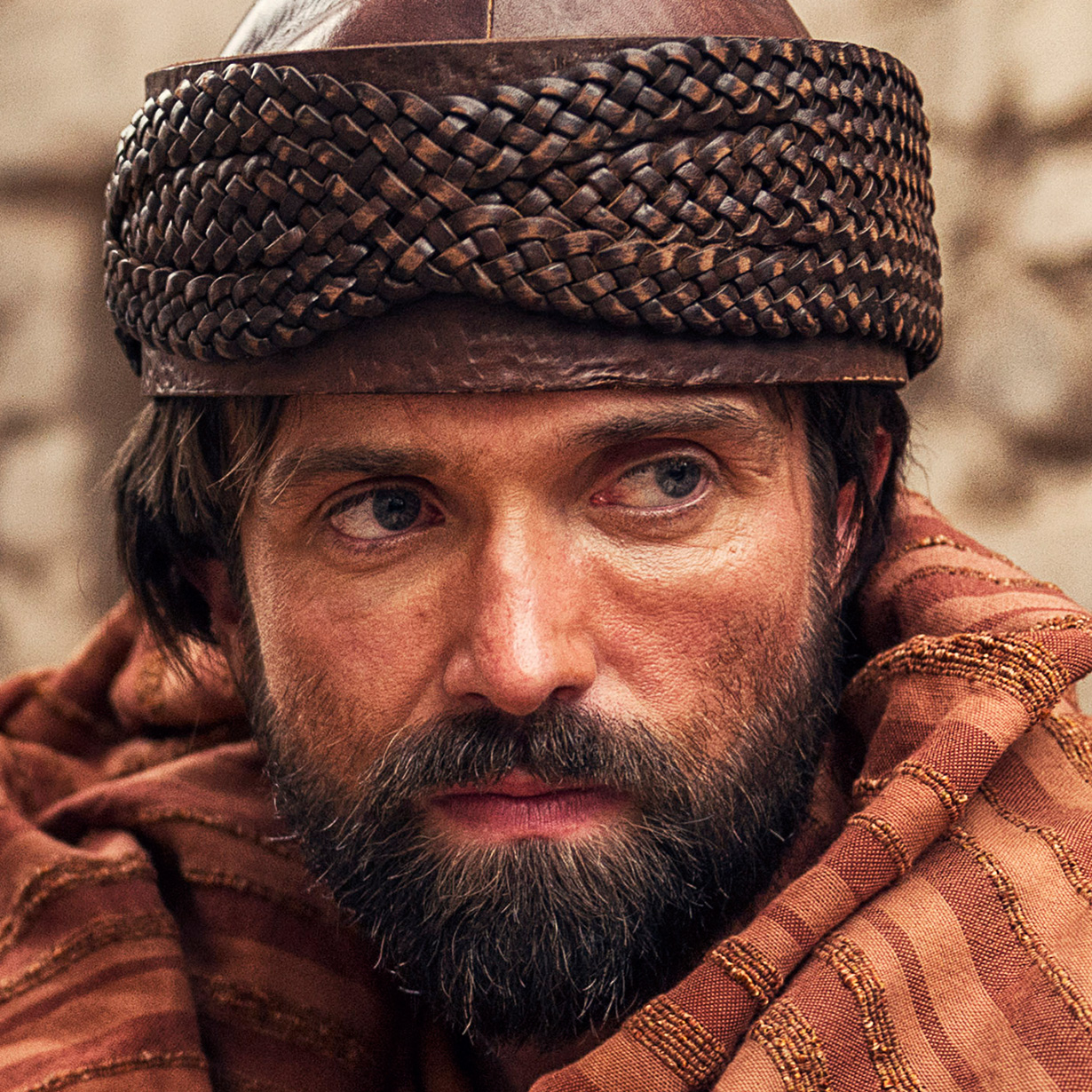
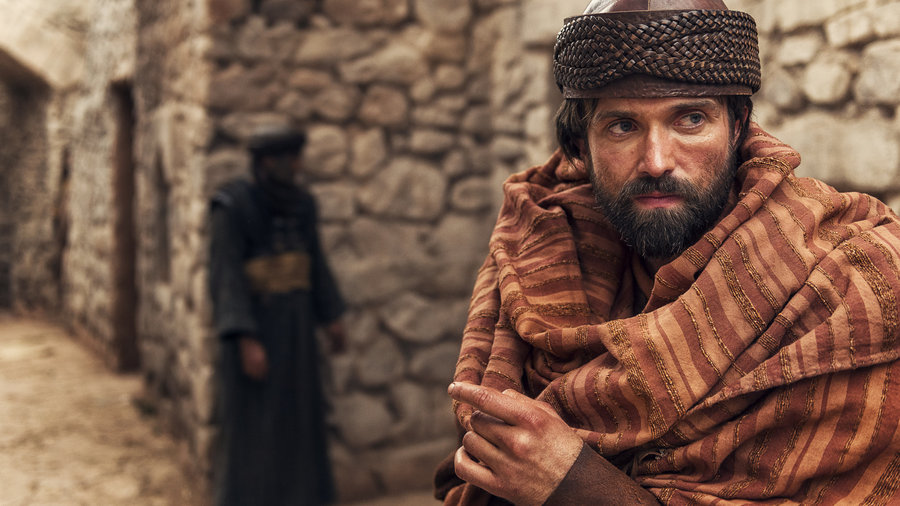
I thought the portrayal of Saul was creepy good. As I watched it, I felt his conviction, his passion. I saw a man who was utterly convinced that this fledgling movement was heretical and posed such a threat to the traditional institutions of the Jewish faith that it had to be squashed...violently if necessary. Throughout his monologues, the camera kept focusing on his eyes, and boy did those eyes cut right through the TV screen. There was one scene that was particularly effective in communicating Saul’s obsession. When Saul visits Caiaphas, who reluctantly grants him audience, Saul begins to confess his opposition to the movement. Very quickly Saul flirts with loosing emotional control. He begins to move his fingers uncontrollably, his eyes become fixated on Caiaphas’ desk, and he has trouble stopping his diatribe. At this point, Caiaphas, and the audience for that matter, knows who sits there. This scene, perhaps more than any other, visualized the passion and conviction that consumed this man—both as a persecutor and later a missionary.

There was another telling scene in the episode that I thought was effective. Early on in the episode Paul and Peter have a rhetorical sparring match. Paul tries to reason with the crowd, for he thinks they are being intellectually victimized by the Apostles. However, Peter counters by appealing to life of Christ. On the one hand, this gives us another snippet of what will come to mark Paul’s ministry. Yes, he was passionate, focused, and convicted, but he was also educated and intellectually gifted. Paul was a rhetorician, and he thrived on making arguments for his positions. For example, Paul will later find himself in the Agora of Athens reasoning with the Greek elite over the significance of Christ. On the other hand, reason alone is not the totality of the Christian faith. As exemplified by Peter, experiencing Christ is the other half of the equation. What secures the logic and reasonableness of the faith is one’s experience with Christ.


Again, there was so much artistic freedom exercised in this episode, and I can see how people may be getting fed up with how the miniseries has unfolded. Yet before one gets too bent out of shape, he or she must consider how that artistic freedom is being utilized. Simply, "How is the freedom being used to push the flow of the episode and overall miniseries, and is that flow honoring the message of the biblical text?" Overall, I cannot complain too much. By the end of this episode, we have been introduced to a man who is passionate about destroying a new movement that he believes threatens the core of the Jewish religion. Sure, none of this is in the Bible, but we have a better of understanding of the type of person who would later experience a world-altering encounter with Jesus and who would later channel those same traits for the glorification of God and edification of the Church. And that is true to the message of Acts.

Monday, May 4, 2015

AD Episode 5

Episode 5 of NBC's AD struck me as a transition-episode. It tied up some older story-lines and introduced new ones. On the whole, this episode assumed much of the interpretive freedom that has come to mark the mini-series. We continue to see Pilate and the deteriorating relationship between his wife and his very loyal (yet increasingly troubled) officer Cornelius. Caiaphas' wife continues to display her dominant personality, which was punctuated by a verbal chastisement of Pilate's wife. And we are introduced to Philip. But let's not forget Boaz, the Jewish assassin.

In this episode we see that Boaz finally surrenders himself, first to Caiaphas. He is then brought to the Roman authorities, and he finally gets his audience with Pilate. However (and you could see this from a mile away), he was stabbed with the intention that he be publicly tortured. However, one of his assassin friends shoots and kills him instantly by an arrow from a roof top, saving him from a week of agony.

This entire story line has been manufactured for the sake of entertainment, not out of fidelity to the biblical account. Yet what we have to understand about it is that it has been functioning in this miniseries as a parallel to experiences of the early Church. Just as the early Church sought to confront the political status quo and incite a revolution, so too did zealots. However, the Church's intention were markedly different. For the zealots, it was all political, physical, and immediate. In both cases though, the potential outcomes were the same--death. As this story line is closed, it concludes with a bang.

The possibility of death for the Apostles was brought to the forefront in a very emotional scene between Peter and his daughter Maya. After Peter and his companions have been beaten to bloody pulps, Maya confesses to her father that she will go home. She confesses that she cannot take it anymore, and she wants to try and return to normalcy. Essentially, she cannot bear the thought of suffering the same fate as her father, which now includes very intense beatings and the very real possibility of death. This decisions stands in contrast to her father's, who painfully realizes what he must do. Peter must say goodbye as he cannot return to Galilee with her. He is convinced by his mission. It has been set before him and he cannot throw in his towel, period.

What was so powerful about this scene is that it reconstructed a moment in Peter's life where, while not documented in the Bible, undoubtedly existed. His lot was cast, and it was not to be with his family or with his old way of life. No. It was to be something different, something more, something eternal. Peter's past life was gone, and his new life was going to be boldly serving the Kingdom of God no matter where it took him. In this scene, we see Peter consciously and finally leave behind the comforts of his past life, his family, etc. for the sake of the Gospel. Yes, a similar choice was made earlier in the mini-series, but at that point Peter had not been beaten numerous times. This time was more difficult, more personal, more definitive.

The Gospel is hard stuff...it demands our allegiance and our loyalty...the totality of who we are. We have been bought with a price and are therefore, servants of Christ Jesus.

Nevertheless, the most powerful scene, and the scene that brought the Boaz parallel to the forefront most vividly, was the final scene. It was also the hardest scene to watch--the stoning of Stephen. We have read about it is Acts, but to actually see a reenactment of someone being drug out to the fringes of the town, strapped to a tree, and then pelted with stones was awful. The sound of rock hitting flesh was cringe-worthy. Think about the iron stomach, intense anger, and violent impulses you must have. Furthermore, the scene portrayed the masses, the ones who actually threw the stones at Stephen, to be robotic pawns of the Temple leadership, which is incidentally faithful to the implications of Acts 8:1.

In this scene, we are also finally introduced to Saul, and what an introduction!

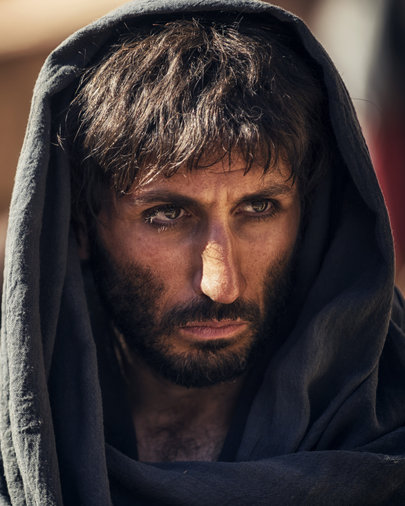
He says nothing....NOTHING. Rather, he intensely watches Stephen as he is knocked unconscious. Then he reaches down to pick one last stone. He hands it to one of his stooges, who them throws it and hits Stephen in the temple. As he slumps, we realize that this was the death blow. Saul just looks for a moment, and then callously (and victoriously) turns to leave Stephen tied to the tree. I thought this introduction was simple but very effective.

Yes, Stephen's speech was horribly truncated in this episode (vs. what it is in Acts). And sure the context of Stephen's arrest was different (In Acts, it was due to false testimony versus a personal response that stemmed from his anger over the beatings of his friends). But the point of this scene was more than absolute fidelity to Acts 7. It was to bring what had been boiling to a head. Sufferings and the potential of death has just become very real for all the Apostles and the Church. What makes it worse is that there is a mysterious new sociopath that now seems to at the center of this violent response.

Monday, April 27, 2015

A.D. Episode 4

At the conclusion of Episode 4 of AD: The Bible Continues, I heard the voice of Russell Crowe's character in Gladiator, "Are you not entertained?!" Yes...yes...I was entertained. As a guy who gravitates toward anything intense, I was very entertained by Episode 4. There was suspense, excitement, and brutality--all the ingredients for a good action movie. Sure, there were more interpretive liberties taken with this episode than all the other episodes previous. But how could you not be intrigued when Boaz (the Jewish assassin) ended up in the camp of the Christians or when Pilate stuffed dead people down the throat of Caiaphas (Those were the ashes of some ancestor, correct? The kids were late in going to be bed, so I missed the scene when they were explained.).


The biblical timeline that was reflected in this episode was essentially chapters 4-5. We saw Peter and John's trial before the Jewish Council, the idea that the believers would share their possessions (I knew they were all communists! ;) ) and the increase in healings and other miracles. We were also introduced to Stephen, who was portrayed as an eager and young idealist, as well as Ananias and Sapphira. Yet let's not forget about the Holy Spirit. We were introduced to him as well. What a powerful and thought provoking characterization.

Ultimately, the rise of Peter's leadership was juxtaposed to the failings of Caiaphas and Pilate. In a span of 50 minutes or so, Peter was transformed from an uncertain leader to an empowered one who demonstrates the necessary wisdom and charisma to lead a fledgling group. We have the Holy Spirit to thank for that. Conversely, Pilate is portrayed as flirting with the edges of sanity, and Caiaphas is portrayed as one who is hindered by his adherence to his rituals and traditions. This juxtaposition was driving the episode as a whole, and it is indicative of the larger purpose of the miniseries up to this point--to display how one movement defied all odds, even an Empire, to become the greatest religion on earth.

There were two scenes that resonated with me. The first was linked to John's premonition, which eventually brought him to the Temple precinct. There he encountered a rich man who declared that while he had money, his soul was void. He posed an interesting question to John. Essentially, "Why do you limit yourselves to the poor and ill?" This was very telling. The Church is not just about social activism and ministering to the poor and downtrodden of society. Rather, it is fundamentally about healing the dead souls of people, and dead souls transcend socio-political boundaries.

Yet the most powerful scene, in my opinion, was the Ananias and Sapphira confrontation. In Acts, it is portrayed as one scene, but in the show it was broken up.It was powerful nonetheless. Particularly powerful was Peter's final confrontation with Sapphira. Having just witnessed the death of her husband, Peter intensely questions Sapphira, who, just like her husband, denies that they withheld any of the money from the sale of their property. Realizing that she has been fond out, Sapphira tries to rationalize things. She essentially states, "There was no malicious intent...We were simply being prudent!" This of course does not work, and Peter stands on and watches her suffer the same gruesome death as her husband and the hands of the Holy Spirit.

The reason why this scene was so powerful is because the rationale for withholding the money is understandable. When I tithe on a regular basis, I always consider what my family will need to pay the bills etc. Indeed, we tithe at least up to a certain level, but anything over that is always considered in light of my responsibilities as a father and husband. In other words, in my tithing I try to be prudent. However, here is where Ananias and Sapphira got it wrong. They lied. Importantly, this is the same lesson communicated by the Bible as well. It was not that they withheld any money as a safeguard. Rather, it was because they were deceitful and proclaimed that the amount given was the amount of the sale (cf. Acts 5:1-11). Be honest about your giving...

According to Acts, this tragic episode also served to emphasize the growing significance of the early community. The sudden deaths of Ananias and Sapphira gave the early Church and its leadership a level of credibility that could not be questioned. It verified the power of the Holy Spirit, and it was sanctioning it all. I think that this was well portrayed in the episode.

Nevertheless, a storm is brewing, and Peter's interaction with Mary at the beginning of the episode alluded to all of this. Those familiar with the bible know that Saul is on the horizon, and I expect him to be introduced very shortly. Boaz will be tracked down, and this manufactured story-line will almost certainly compromise the relative peace of the community. And all of this is faithful, in the general sense, to Acts, which also details how the momentum of the early Church was hindered by the death of Stephen and persecutions of Paul. However, Acts also maintains that this imminent struggle was the catalyst for taking the Gospel beyond Jerusalem and Judea.

Things in this miniseries will transpire quickly over the next few episodes. Hang on...

Monday, April 20, 2015

AD Episode 3: Uncertainty in all its forms...

Episode 3 of NBC's AD: The Bible Continues was essentially a collapsed version of the first 3 chapters of Acts. What stuck out most was the way that the writers and producers structured the episode. The build up was slow and deliberate, displaying the interpretive freedom that has effectively become one of the series' defining characteristics. It took a while to get to the content of Acts, and the episode ultimately climaxed with 1) the empowerment of the disciples by means of the Holy Spirit's decent through tongue of fire (Acts 2) and 2) Peter's miraculous healing of the cripple near the Temple (Acts 3). To intensify the climax, Peter's two sermons recounted in Acts 2 and 3 were amalgamated into one sermon boldly proclaimed in front of Caiaphas, who stood of the Temple entrance. Peter and John are then beaten and thrown in jail.

If I could chose one word to describe the permeating theme of the episode it would be "uncertainty." The disciples were uncertain about what Jerusalem held for them. They knew the powder-keg to which they were returning, and they were uncertain as to what this Holy Spirit thing would mean for them. The only thing about which they were certain was that Jesus told them to go back. The Romans were uncertain of what this Jesus cult would bring next, and the Jewish leadership was uncertain as to what the variable of Pentecost would add to an already volatile situation. In a word, the buildup to the episode's climax was driven by these paralleled streams of uncertainty.

I like the element of uncertainty that has been developed over the first few episodes, even though it is a very clear example of interpretive freedom exercised by the writers and producers. It has effectively added flesh and bones to the characters of the Bible. What were the emotions of the disciples after the ascension? What kind of questions did they have as they pondered and waited for this promised Holy Spirit? They were never completely certain of things, were they? Nevertheless, in this episode I would have liked to see a little more emphasis upon the upper room event during Pentecost. According to Acts, this was the moment when the disciples realized a few things about the resurrection event (see Peter's sermon in ch. 2). It really was a watershed moment for the early Church, and so it is really difficult to overstate it importance. It deserves it time in the sun. In other words, the unfolding of the episode's climax felt rushed. According to Acts, this moment was about realization and empowerment. It was this moment that gave Peter and Co. the boldness to defy the Jerusalem leadership and proclaim that this Jesus cult was, perhaps, more alive and vibrant than ever. Indeed, there is a telling scene at the very end of the episode where Peter glares at Caiaphas as if to say, "You have no idea what is coming." This nicely visualized the newly endowed boldness supernaturally given to Peter. Yet all of it still left something to be desired.

Why did they rush the Pentecost event and Peter's subsequent healing of the cripple? It appears that the writers and producers has chosen to make the Church's rise in the midst of political turmoil to be a main story line, if not the main story line, for the miniseries, at least for the time being. But this is not to say that such a historical emphasis is misguided or wrong. No. It is correct...part of the miracle of the early Church was its ability to navigate the turbulent socio-political waters that were 1st Century Palestine. But as I reflect, I am struck with a question that I believe deserves asking. Is this point of emphasis in the miniseries more about creating a story line that is entertaining to a television audience than recounting the advancements of the early Church? I don't know. I realize that there is something quasi-political about the spread of the early Church, not to mention genuinely suspenseful about Acts. Time will tell if this artistic emphasis will compromise the major point communicated in Acts--the global spread of God's kingdom through the empowered and bold apostles (verses the deteriorating political climate of Palestine in the 1st Century).

There was a very telling scene in this episode, and it occurred between Peter and his daughter. Peter's daughter was pressing him, telling him that he had changed. She recounted how he used to know exactly what he wanted and how he went after it. In a word, her father displayed a history of being driven. She of course was contrasting this to his current state of confusion and anxiety. Peter essentially responded, "I knew that I wanted to fish. Fish meant money, and money meant food and clothes. Life was simple." To put it another way, Peter was declaring that life was predictable, but now Jesus and the implications of his ministry--and Peter realized that he could not ignore this man--had introduced a variable in his life that was difficult to anticipate. All he knew what that Christ demanded his allegiance, his full allegiance.

Such is the gospel. It demands our allegiance, our full allegiance. And when we offer it, we must accept the fact that there will be times when we must accept a certain level of uncertainty. Where we will go? What will it demand of us? These are the questions that the apostles first lived out, setting an example of what it means to be a follower of Christ. So yes, there will be uncertainty...there has always been uncertainty. However, it is a tamed uncertainty, grounded in the absolute certainty that Christ is alive and empowers his people to proclaim the gospel boldly. 

Tuesday, April 14, 2015

A.D. Episode 2


Sunday night was episode two of NBC’s A.D.: The Bible Continues. I will admit that I was entertained. The episode was certainly dark at times, but it was an appropriate darkness. Overall, I was entertained. Nevertheless, if there was any doubt to the level of interpretive freedom that would, or would not, be exercised by the writers and producers of the min-series, it was laid to rest with this episode. Essentially, episode two can be described as a substantial amount of filling-in-the-narrative-gaps around selected episodes documented in the Bible.

The episode essentially began with the resurrection and ended with Jesus’ ascension. In between, the interaction of Jesus with his disciples was recounted, and the witness of John appeared to be a major source. There was the episode of Jesus calling from the shores to Peter and company to cast their nets on the other side of the boat, as well as Jesus’ three-fold command to feed his sheep (Jn 21). There was also doubting Thomas (Jn 20). Yet permeating the episode was a reconstructed blow-up between Pilate and Caiaphas. Much interpretive freedom was exercised here, and one could even say that it dominated the episode. Whether or not this will be a point of criticism remains to be seen. Nevertheless, I enjoyed it.

One of the reasons why I enjoyed it was that, upon final editing, it was used to provide a structure for the episode that effectively asked the audience to ponder the different experiences caused by Jesus’ resurrection. By moving between the Jesus’ interaction with his disciples and Pilate’s fight with Caiaphas (an interchange), a contrast was created. More specifically, it was a contrast between those who enjoyed the relationship of Jesus and the peace that it brought, versus the personal turmoil of those who actively opposed Jesus. Caiaphas’ world began to crumble, including what had been portrayed as a solid marriage with his wife. Pilate became more and more ruthless, even flirting with the boundaries of sanity and control. I thought that this was a great dynamic that really drove the episode.

The portrayal of Pilate, in my mind, was excellent. For a number of reasons, the prevailing opinion of Pilate, at least among the majority of the Church, appears o be that Pilate was some sort of spineless governor that really had a hard time standing up to pressure. Perhaps this is because of the biblical testimony, which certainly paints him as one who was swayed by political strategy and political pressure. However, one must remember that Pilate was a Roman governor, and a governor of one of the more volatile regions in the Roman Empire. A spineless governor in that context would have been eaten alive and spit out in seconds. I think that this series has done a great job with the characterization of Pilate, portraying him as a governor who could really throw the hammer down when necessary. The dramatic scene of murdering the guards in front of Caiaphas—as to clearly explain who was in charge—certainly did well to communicate this historical reality. But I would say the following quote from the episode did an even better job. I am paraphrasing from memory, but Pilate said something to the effect, “When faced with the opportunity to be fair or firm, I have found that being firm is best.”

Overall, I think that the writers and producers have done a solid job in emphasizing the uncertainty that was a part of the disciples’ lives during those initial days after the death of Jesus. In the first episode, the uncertainty was related to whether or not Jesus’ death was supposed to have happened. In the second episode, the uncertainty was a political uncertainty. What was going to happen in Jerusalem given that order existed on a knife’s edge and the proclaimed resurrection threatened aspects of that shaky order? We have to remember that the Gospel was paradigm shifting, and to have that assault on the socio-religious power structures occur in such a turbulent socio-political context was a recipe for skepticism, hesitancy, doubt, and drastic measures. I am amazed how these fishermen were able to navigate it all and become the pillars of the Church.

Monday, April 6, 2015

If it gets people to read the Bible...

One of the traditions of Easter is to have the token Jesus-shows broadcast on network and cable television. Naturally, the Ten Commandments was on. Yet I found myself watching the Dateline special that was devoted to the mini-series "AD." NBC devoted an hour special in anticipation of the initial episode to interviewing Mark Burnett and Roma Downey about the production of their series, which incidentally is a follow up to the popular "Bible" mini-series that aired on the History Channel a while back.


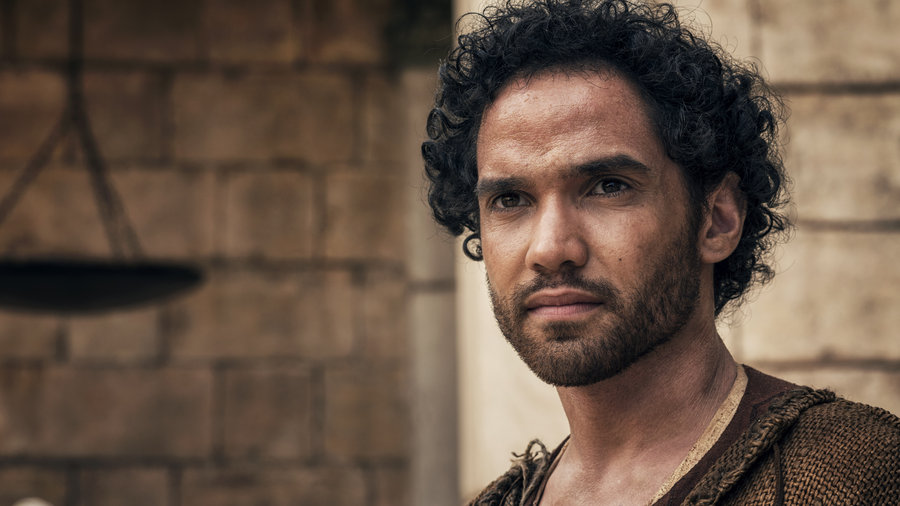
Anyone who knows me knows that biblical programming simultaneously fascinates me and drives me nuts (...it is that PhD thing again...). Consequently, I was thoroughly intrigued to hear their rationale in making the mini-series, as well as the thoughts of media critics from Variety, NY Times, and others. However, at times I found myself throwing my hands up in the air in frustration. For example, When Downey and Burnett were discussing some "lessons learned" from their previous production--the Bible-- they mentioned how they received some critical feedback suggesting that their casting was "too white." In turn, Downey and Burnett made a conscious decision to put together a cast that was more diverse. So, as they put it, they cast a Hispanic Jesus, Mary Magdalene, as well as an African American John. Moreover, NBC then interjected a snippet from a pastor from a prominent African American A&E church in the DC area who said that he wished that they would have done more.

Now, I am not a marketing person and I am not going to pretend that I understand the dynamics of producing a successful television series. Mark Burnett, and this is pretty universally accepted, is great at this. Downey was a star of the successful Touched by an Angel series. Therefore, Downey and Burnett know what drives the Hollywood machine, and for their efforts to be successful, they likely realized that the diversity issue was something that had to be addressed. Nevertheless, their decision brings an interesting dynamic of the mini-series to the forefront--the interaction of making television that has wide appeal with accuracy.

Let's face it. We live in a time where diversity is an unavoidable issue. However, if you want to be as accurate as possible, you need to portray John, Mary, and the others as Middle Eastern people because that is what they were. (I am not the only person to have commented on this. See my professor, Dr. Ben Witherington.) What is interesting about this dynamic is that during the interview Burnett states that he believes that one of the reasons for the intense criticism around the recent movies of Noah and Exodus stems from a reaction against taking too many liberties...even going so far as "messing with the text."

Artistic license is an unavoidable reality of Hollywood, and so I eventually conceded that I should not be too agitated with the issue of casting diversity, even it is for the sake of what appears to be cultural appeasement. In turn, I found myself focusing more frustration on the fascination with Mary Magdalene. During the NBC interview, the producers of Dateline went out of their way to emphasize the role of Mary. This recent infatuation is made possible by the whole Gnostic Gospel debate, and it is the Gnostic Gospel debate that drives me nuts. I cannot go into that here, but suffice it to say that just because "other gospels" were floating around does not give them a footing in theological discourse, particularly orthodox theology. And don't give me the socio-political power play argument--that the reason why the Gnostic Gospels were deemed heresy is that they posed a threat to the developing power-structures within the early Church.

But as I am sitting there watching these shows with my wife, and as I was venting my frustrations, Ginny looks and me and says something to the effect, "If it gets people to read the Bible, is it really something to get worked up about?"

Well, that puts it all into perspective doesn't it?

So I ultimately realized that while all of my frustrations are legitimate, they must be put in their proper context. Indeed, they can have their day in the sun, because the details matter. Historical accuracy matters. However, I think that they should be entertained among mature believers, and certainly not in a manner that turns off people who happen to be legitimately interested in the gospel. If Christians bicker too loudly among themselves, it gives the impression that Christians are inherently a discordant bunch. And who wants to be part of a movement that spends their time arguing?

So, at this point, I am going to try to enjoy this mini-series and try to speak to its (hopefully) positive contributions. The initial episode was, in my opinion, well done overall. In particular, I think that it described well the frustration and confusion that ultimately ran rampant among the disciples during the days after Jesus' death. Remember, the disciples' expectations of what they thought was going to happen did not mesh well with reality. Psychologists refer to this as cognitive dissonance, and this phenomenon produces a range of reactions, which include frustration, anger, confusion, etc. Furthermore, I found the zealot story line to be an interesting touch, and the interpretation of Pilate's character was thought provoking.

So...we will see....if it goes off the rails, if the details start to pile up and erode the integrity of the biblical narrative, then my position will likely change.