Wednesday, July 1, 2015

Where Identity, Community, and Transformation Collide

When I was on vacation over the past weekend, I was greeted in my hotel with the news that the Supreme Court of the USA overturned individual state laws that banned same sex marriages. After a few moments, Ginny looked and me and essentially asked, "What does this mean?" Her question was loaded. It implied not only what this means for the Church but also what we are to tell our children.

I was not surprised by this ruling. I think that the writing was on the wall a long time ago. Furthermore, I am currently (but hesitantly) not worried for the Church, so long as the Federal Government does not begin to mandate that the Church has to perform same sex marriages. Indeed, there are those who say, "Well...look at the slippery slope that we are on!" I have never been one for the slippery slope arguments, and such a scenario would constitute perhaps the grossest violation of the separation of Church and state. However, what is interesting about this situation is that this ruling has, in my mind, undermined a fundamental principle of the Constitution--the place for states rights to exist in cooperation with federal stipulations. In this ruling, the Supreme Court effectively said, "To hell with the laws of individual states. You shall assimilate." So, maybe we are on that slippery slop...only time will tell though.

Nevertheless, this ruling has thrust into the forefront...again...the importance of this issue for the American Church. Furthermore, and make no mistake, for those denominations that have been ducking this issue, they can no longer. Each tradition and church will now have to make a statement...go on the record if you will. However, how do will the Church do this? What has not been said already?

For example, advocates of the LGBT community have long stated something to the effect that "Jesus preached love and acceptance. Come as you are. Who are you to judge?" In response, Evangelicals have often been quick to point that such an acceptance is not technically absolute. In turn, Evangelicals trumpet, "Sure, come as you are...but know that you MUST change." To this, the advocates of the LGBT community chastise Evangelicals for being selective in the sins that they target. "Sin is sin," they often say, "and to single out types of sin at the expense of others is wrong." The stickiness of the situation is that both sides are partially correct.

Another angle that is often taken is that the Bible makes clear-cut, unequivocal statements, on the immorality of the homosexual lifestyle. Paul, Leviticus, and others are very clear that said lifestyle is an "abomination" and a violation of the intended order. In response, advocates of the LGBT community often suggest that the Bible, with its clear denouncements, is a culturally restricted document, and its statements have little to no relevance in today's society. For example, I heard a paper once where the presenter said that the Bible's statements on homosexuality are only descriptive and have no prescriptive dynamic, particularly since it does not address the host of dynamics that characterize the modern lifestyle. In other words, contemporary society has progressed beyond the scope of the biblical commentary. The result is, unfortunately, that there is no place to even start the conversation between advocate of the LGBT community and the majority of the Evangelical community.

A friend of mine has recently mused on this issue, and you can find it here. In this posting he mentions that in his experience he realized that the issue of identity is at stake, not merely "dos and don'ts." Members of the LGBT community have their identity tied up in their lifestyle. So, when Evangelicals say, "Sure come...but CHANGE," we are asking them to change how they perceive themselves, how they identify themselves, how they define themselves. It cuts to the core of who they are. This is a hard truth to learn for Evangelicals. The issue is complicated, more nuanced, than we often realize.

The issue at stake is not merely, "Well do you take the Bible seriously or not?" Or, "Why do you have to be such a literalist?" No, at the heart of this issue is the convergence of lifestyles, individual identity, and communal identity. So, perhaps one can begin from the standpoint of identity, particularly the intersection of individual identity with corporate identity. There are at least two places in the history of God's people that manifest the convergence of lifestyle, individual identity, and communal identity. The first is when Israel first settled into Canaan, and the other is when the early Church wrestled with the implications of Gentile inclusion at the Jerusalem Council.
  • In the book of Joshua we read about a covenantal renewal ceremony on Mt. Ebal (cf. 8:30-35). In that text, we are told that foreigners accompanied native born Israelites, women, and children in this public proclamation of living in accord with a covenant. This principle is reiterated again in chapters 23-24, but there is an additional sense of urgency that individual actions must be line quickly with community's ethos. So we see that the boundaries of the community are porous, but within those boundaries it is not a free-for-all. The members of the community are to "put away their foreign gods" and "serve the Lord." The vitality of the community, and thus its identity, depends on it. 
  • In Acts 15, we read about the Jerusalem Council, which was devoted to hammering out the place of Jewish traditions for the Early Church. One the one hand, there were traditionalists who were advocating for the customs of old. On the other hand, there were progressive elements who did not see the applicability of certain customs in light of new revelations. Something had to give and the council decided to yield so far as mutual respect was shown. 
So what can we learn from these quick episodes? First, there is an lifestyle expectation for those members within the community of God. As I say, the community of God is simultaneously inclusive and exclusive. It calls everyone to join, it bars no one, but there is a lifestyle expectation placed upon its members. This is incontrovertible. However, this is not to say that the community is "stuck in the past." The Jerusalem Council shows that there is some freedom to be exercised with respect to the community's expectations on lifestyle. 

So where does these leave the LGBT community? Does the flexibility alluded to by the Jerusalem council extend to the homosexual lifestyle? Should the Church accommodate, and thereby sanction, this lifestyle under the guise of progressive enlightenment? In my opinion, it cannot. As I mentioned above, the statements made in multiple contexts, across the testaments are resoundingly clear. But to sum up Paul, perhaps the most famous recipient of progressive revelation (i.e. the inclusion of the Gentiles), the homosexual lifestyle is a perversion of the intended order.

Returning to the issue of identity. Upon inclusion into God's community, individual identities are checked against external criteria. Individual identities, with all of their manifestations and characteristics, must yield and be transformed where necessary. As for the canon of that transformation, it is found in Christ and, by implication, Scripture. Consequently, when a Christian responds to the suggestion that a particular lifestyle misses the mark with the rationalization that it is a part of who they are, I understand them, for it is hard to admit that who we are falls short. Nevertheless, I am ultimately not satisfied. The Christian community is not about you or me and how we think we should identify ourselves. It is about God seeking to transform you in his likeness and embracing his identity for you. 


Monday, June 15, 2015

Episode 11: The Offensiveness of the Gospel

"It must surely follow that we be free to preach openly."

"There are limits to what is acceptable. The Romans are a literal people. They take any mention of kings at face value and call it sedition. Saying that Jesus is king endangers the temple." 

"Then we will be cautious."

"And you will refrain from saying that he is the Messiah."


"But that is the truth."

"Your truth will offend many and I may not be able to protect you."

"We wish to sit in the temple and win respect--not to offend anyone. But we will not be censored. He is the Messiah."

"And you are not shy in your requests."

"He is the Son of God. He is resurrected, and he will return."

"Well, if you will not be persuaded otherwise."

"I won't."

"Then let it be so. I trust you will remember my generosity in the days to come."

_____________________________________________________________

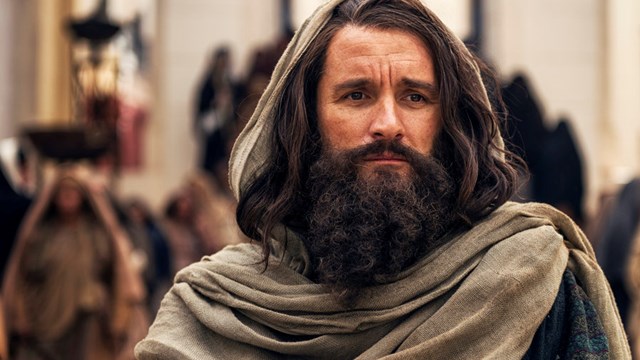
As I pondered this interchange between James, the brother of Jesus, and Caiaphas early on in the 11th episode of NBC's AD: The Bible Continues, I was reminded of something. The Gospel is offensive.

Think about it. It tells people that they are not good enough, that the status quo of the human condition will not cut it. Furthermore, it tells humanity that we need help...that the solution is external to ourselves. The Gospel judges us, and it does not care about our "intentions" or our "goodness." It tells us that we have fallen short, and it tells us why. And if we are able to put aside our emotions when confronted with such audacious claims--enough to allow the truth to set in and accept a Savior--the Gospel still does not allow us to be content. We can always get closer, renewed a little bit more, sanctified a little more profoundly.

The idea of an offensive faith is counter-cultural. We live in a culture where political correctness drives the masses. Americans are willing to give anyone the benefit of the doubt and not chastise anyone for any lifestyle choice. The lines of morality have long since been blurred, except in instances where someone has the gall to register any sort of definitive statement about the legitimacy of someone's actions or opinions. In a word, the only unforgivable sin in American culture is being perceived as judgmental. Why? Because judgmental people do not understand a person's unique experiences and/or environment. They are hypocritical, not able to recognize the plank in their own eye.

The reality is that the Church is simultaneously inclusive and exclusive. It is inclusive because it beckons all people to come to the cross, irrespective of gender, ethnicity, etc. And it does not care about your past. As Philip said to the Ethiopian in this episode, "What matters is what you choose now to be." On the other hand, the Church is also exclusive. All can come, so long as they are willing to live by an accepted ethos. We see this throughout Scripture. For example, in the closing chapters of Joshua, Israel is settling in the Promised Land. There Joshua tells the community that their future relies upon their ability to put aside their past, with their foreign gods, and adhere to the covenant. The essence of the Pauline Epistles assumes that an ethos, or a standard of living, is essential to being apart of the Church. Consequently, the Church is not a community where anything goes under the guise of "love." No, Scripture tells us that if we love God, then we will do what he commands.

May we not forget or put aside the offensiveness of Christianity. The Gospel's offensiveness helps give us our identity...it helps establish the paradigm that will order our worldview. 

Monday, June 8, 2015

Episode 10

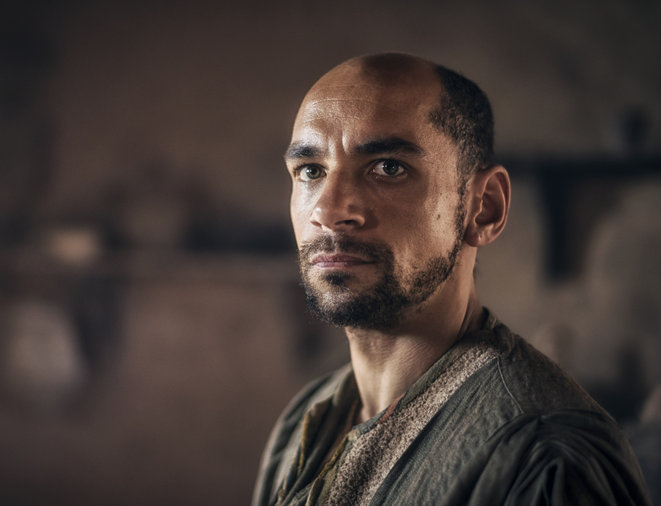
Early in episode 10 of NBC's AD: The Bible Continues, we are introduced to James, the brother of Jesus. According to Acts, James becomes a follower of his brother and one of the pillars of the early Church. In light of the latter, we should envision a man with charisma and conviction, and we are not disappointed in this episode. In one particular scene the Apostles gather around James and listen to him recount Jesus's visitation to the temple when he was a boy as well as Jesus' personality growing up. Even Peter seems to be mesmerized. Yet we also know that James exhibited some tendencies that would later be described as "Judaising tendencies." Consider this. In Acts 15, James provides the definitive statement in support of Paul's push for a non-cumbersome Gentile inclusion. Reading between the lines, the implication is that James too was misguided initially, assuming that the Gentiles would need to adhere to the stipulations of the law.

Another reality of the Jerusalem Council is that Paul was pitted against other members of the early Church in determining its official position on the place of the Jewish legal traditions. This too was displayed effectively in episode 10. As if a storm was steadily brewing on the horizon, the joy ofJames visitation was squashed by Paul's bluntly conveyed convictions. In another scene, James brings word to the Apostles that Caiaphas has extended a place in the temple, assuring peaceful worship, so long as they respect the Jewish traditions. Of course, this sounds like good news to the Apostles, for it effectively will stop their persecution. However, Paul sees it as ridiculous. He interjects, asking why they should even be concerned with such an offer. He goes so far as to call the temple "a pile of stones." So, this episode creatively, but effectively, demonstrated the very real historical reality of Judaising tendencies within the early Church and Paul's opposition to them.

The temple was an important symbol in this episode. Indeed, this is a symbolism that is not new to the miniseries; the writers and producers have done well to communicate periodically and creatively the historical reality that the Temple became a symbol of Jewish culture and identity in the midst of foreign occupation. It really was the center of the 1st Century Jewish worldview. Nevertheless, over the past few episodes, this symbol has steadily increased in prominence, and it has been done so by means of some perceived threats. On the one hand, the Jewish Temple is threatened by Caligula's desire to erect a statue of his likeness. On the other hand, there is an increasing concern that the early Church will also work against the prominence of the Temple. Will the early Church undermine the Temple or respect it?

Of course, this build-up is by design, particularly since it helps bring full circle all the story lines that have been developed throughout the miniseries. How will the Church, which really is the continuation of an already established tradition, survive in the midst of the most delicate of socio-political situations? The Church introduced a variable which the established institutions of 1st Century Palestine (Roman and Jewish) struggled to understand. The Church claimed fulfillment of the Jewish religious tradition, and so in the eyes of the Church it should not have been seen as a threat. However, the Jewish establishment begged to differ. Jesus of Nazareth as the Messiah caused too many problems, to their institutions as well as their frosty relationship with Rome. However, the Church certainly did not pose the same threat as the zealots, who wanted to overthrow their overlords at whatever the cost. In other words, 1st Century Palestine was one huge balancing act. If at the end of the episode you were struck with the incredible volatility, lack of certainty, and struggle, rest easy. You're not alone. That had to be the intention.

There is a another element of the Temple's symbolism present in episode 10. Yom Kippur was the featured event in this episode--the single most holy day of the Jewish religious calendar that represented atonement for the nation. In one of the final scenes, we see one of the priests escorting the scapegoat to be released in the wilderness, bearing the burden of the nation's confessed sins. Immediately after this, we see Paul's goodbye to the Apostles. He has consented to go back to Tarsus because it was found out that he was in the cross-hairs of the Sanhedrin and zealots. As he turns to walk alone along along the road, one cannot help but make the connection that he too has become (in a very general sense) a scapegoat. Just as the goat was forced to leave Jerusalem, so too was Paul.

As Paul walked toward the desert, I felt sorry for him. Yeah...he was blunt and abrasive at times, but he was so passionate and determined. You cannot help but respect that. Most difficult though was the reality that he experienced significant headwinds from people within his own community. At times you get the impression that Paul is on an island of one (kudos to the writers and producers for effectively communicating this reality). Nevertheless, in this final scene we are also shown something profound...something that would later define an important tenent of Pauline ethics. A mature believer must be willing to set aside personal passions and convictions for the sake of the community. Indeed, there will be times to take a stand--sometimes emphatically. But Paul demonstrates throughout his letters that the mature believer must know where to be a bit relaxed and where not to.

Paul could have decided to stay in Jerusalem and risk his neck for the Gospel. Yet in doing so, he would have put others at risk as well. Paul realized that his actions, no matter how noble, may have negative implications for others within the community...and to that he decided to ultimately yield. Even the most zealous of convictions need perspective...because focused zeal becomes recklessness.

Tuesday, June 2, 2015

Episode 9

One of the beauties of Christianity is the claim that every slate is cleaned at the cross. That upon conversion, everyone's past is just that--past. Of course with conversion there is the expectation that your lifestyle will conform to a certain standard, or an ethos, but it is a second chance in its purest form. A corollary of this reality is that some conversions may create tensions within the community. As humans, we remember things, and, if we are honest, sometimes memories are hard to get over. It is even more difficult when the new convert has tangibly harmed you or someone close to you. Consequently, the inclusive nature of the community, the fact that anyone who confesses Jesus as Lord will be saved, means that there will be times that it will be hard to accept someone's conversion.

With Paul's conversion, we see this dynamic in play, perhaps more vividly than any other occurrence in Church history. Indeed, Acts does not dwell on it, but the text mentions enough to make it clear that Paul's conversion was met with shock and skepticism. First, we are told that Ananias had a back-and-forth with God over his call to heal him from blindness. 

  • But Ananias answered, “Lord, I have heard from many about this man, how much evil he has done to your saints in Jerusalem; and here he has authority from the chief priests to bind all who invoke your name.”  But the Lord said to him, “Go, for he is an instrument whom I have chosen to bring my name before Gentiles and kings and before the people of Israel; I myself will show him how much he must suffer for the sake of my name.” So Ananias went and entered the house.... Acts 9:13-17

Later we are told that the disciples were genuinely afraid of him when he attempted to join their ranks.

  • When he had come to Jerusalem, he attempted to join the disciples; and they were all afraid of him, for they did not believe that he was a disciple. But Barnabas took him, brought him to the apostles, and described for them how on the road he had seen the Lord, who had spoken to him, and how in Damascus he had spoken boldly in the name of Jesus. So he went in and out among them in Jerusalem, speaking boldly in the name of the Lord.   Acts 9:26-28

It was not until Barnabas put his neck on the line for Paul's sake that he began to make in roads into the community. One wonders if certain people never really got over Paul's past. 

The most recent episode of NBC's AD: The Bible Continues gave substantial time to this unspoken but very real dynamic to Paul's conversion. It took the passages just mentioned seriously and offered an artistic reenactment of what those initial conversations may have been like. In doing so, the writers and producers chose to contrast Paul's brazen insistence on moving forward post conversion (as if to brush aside the past) with the disciples' insistence upon talking about the past (as if to dwell on the past). For example, when meeting a couple of the disciples after his conversion Paul proclaims that he understands their fears, but he does not pacify them with any eloquent speech. Rather he states matter of factly, "I have been baptized and made new." Moments later, when accused of violently undermining the Church, Paul acknowledges it only to pacify their fears with the current reality that he has "turned to Christ." This dissonance continues even when Peter and Paul ascend to an upper room to discuss the issues. Paul insists that the Church must start planning, but Peter wants to know what happened on the road to Damascus. Even after Paul tells Peter that they have conveniently forgotten about the teaching of forgiveness, Peter continues. In a telling moment, Paul speaks to his vision of how God will use different people to meet the same goals. Peter defiantly shakes his head. Eventually, Paul screams in exasperation, "Will you ever let it go?!"

It was an interaction that I thought was effective. It painted both parties in a less than ideal picture and it urged the audience to ponder on which side they found themselves. On the part of the disciples, they are shown to be fearful, stubborn, and quasi-hypocritical. Past history was too much. Paul is painted as largely insensitive, somewhat detached, and abrasive. He just wanted to move forward--period. However, both sides are totally legitimate and understandable. This had to be intentional, for after watching the scenes, I was struck with the significant hurdles that had to be negotiated by the disciples. What they experienced defied logic, and it pitted human nature versus love and forgiveness.

But these scenes also demonstrated that the same driven, obsessed personality that was behind the persecution of the Church would be behind the spread of the gospel. Just as Saul was chomping at the bit to destroy the Church, Paul was chomping at the bit to invigorate the Church. Perhaps then this gets at what I admire most about Paul--his stalwart convictions, driven personality, and intelligence. Ultimately, Paul's concern was the gospel, and he did not care who he called out in the process (For example, in Galatians Paul rips Peter when he compromises the integrity of the gospel.). The Church was built on the shoulders of Paul-like people, and make no mistake, its futures depends on them as well.


Monday, May 25, 2015

Episode 8


I am just going to get my rant out of the way first thing. NBC’s AD: The Bible Continues is becoming a biblical account wrapped in fictitious events. Moreover, last night’s episode was particularly frustrating. How can you minimize the single greatest conversion in Church history? And yes…I do think that the fabricated storyline that involves Pilate, Tiberius, and an insane Caligula did just that—muscled the conversion of Paul to the fringes of the episode’s focus. Yet this is not the only reason why last night’s episode kinda drove me crazy. To someone who does not know the content of Acts, he or she may open up a Bible, flip to the book of Acts, and expect to read the accounts of Tiberius’ assassination, Pilate’s political maneuvering, and Caligula’s moral depravity. Acts is about the globalization of the Church—how it became a world movement out of a regional phenomenon. Indeed, it is okay to offer a larger socio-political context for the rise of the Church, but it is another thing to give it a fanciful context and drown out the Church’s progressions with ancient Near Eastern subterfuge and the political ambitions social factions within first century Palestine.

Okay…on to something about the episode that was somewhat enriching….

In this episode, we finally see Paul’s conversion. As I mentioned, I believe that this is the single greatest conversion in Church history. Not only was it about as dramatic as one could get, but the effect is second to none. The Church’s arch-nemesis becomes its greatest weapon. Yet what I appreciated about the portrayal of this event was not the Damascus Road confrontation, but rather the convergence of reason and experience.

In a telling scene, Saul is obsessively heading toward Damascus. He is demanding a crazy pace from his companions, and he is mumbling and spewing vitriol along the way. At one point, Reuben (the High Priest’s guard who was told by Caiaphas to accompany Paul) gets fed up with his travel companion from hell and confronts Saul, asking why he is so obsessed with Peter. Saul angrily states that it makes no sense that God would choose an uneducated fisherman. According to Saul’s mindset, the very choice of this vessel defies logic. So we see that Saul’s struggle with this whole Jesus movement, at least in part, appeals to perceived reason…to perceived logic.

Now juxtapose this scene with a later one. Paul, who has just been cured of his blindness, sits around a table with his companions having a meal. Ananias is there, and his travel companions sit there dumbfounded as Paul explains that he has given up his former way and intends to be baptized. He gets up with Ananias and leaves. Fast forward. We see him at the river, and Barnabas is there. Barnabas is visibly struggling with what he is hearing, but it is clear that Paul’s experience has consumed him. He cannot explain what happened, how it makes sense—only that he was blind but now he sees.
 
This juxtaposition represents what I believe is a hallmark of a mature believer, one who is neither purely cerebral nor purely experiential. Intellect and emotions must collaborate, and neither can drown out the other. If this happens, the Christian becomes a robot or a windbag blown by the winds of experience and emotions. Reason offers a framework to assess our personal experiences, and experiences breathe joy into our faith.

Also implicit in the scene of Paul’s baptism was an awareness that he was still unsure what this all meant. Yeah…he knew that he was now called for something special, but the specifics of that calling were still to be hashed out. The last image that we see of Paul in this episode was him bolting into the local synagogue, against the council of Barnabas and Ananias, because the burden of the call was too great. To heck with any questions he may have had, because he knew what he had to do. So, as this episode closed we already see that the same passion and conviction that characterized him as the Great Persecutor will drive him as the Great Missionary.

While the artistic freedom that is being used to paint a larger socio-political backdrop is starting to grind my nerves, the artistic freedom that is being used to fill in the gaps of Paul’s character development are very enriching and thought provoking. How often to do we just sit there and cripple ourselves with our questions of what we are called to do? As if the answer is going to be revealed in a dream or written on the wall… Why is it so hard to allow our convictions, which are made clear by the Holy Spirit, to drive our actions and trust that the intricate details will be made clear in due time?

Monday, May 18, 2015

Episode 7

He replied, "It is not for you to know the times or the periods that the Father has set by his own authority. But you will receive power when the Holy Spirit has come upon you; and you will be my witnesses in Jerusalem, in all Judea, and Samaria, and to the ends of the earth" (Acts 1:7-8; NRSV)

The book of Acts is laid out on a geographic trajectory, where the spread of the early Church goes through distinct phases. First, there was Jerusalem, where the faith was born out of the aftermath of Jesus' death and resurrection. However, it soon spread from its original confines to reach larger Palestine and, eventually, the epicenter of the known world--Rome. As for the catalyst for the spread, the reason why the Church morphed from a regional phenomenon to a global movement, Acts strongly suggests that it was not because the Apostles fully understood the divine intentions of Jesus' last words. Rather, Acts suggests that the spread of the gospel was a by-product of Saul's persecution of the Church. For example, Acts 8:4 tells us that the scattered went from place to place preaching. In other words, they were forced to leave, and they took the gospel with them (Saul, even when he was Enemy #1 of the Church, was responsible for the globalization of the Church. Talk about God being the author of history.).

I will admit that episode 7 of NBC's AD: The Bible Continues was a little disappointing. The whole Tiberius visiting Jerusalem, Pilate pleading his case and getting in bed with Caiaphas, Peter confronting Saul in the streets of Jerusalem, Saul pursuing Peter in Galilee and threatening his daughter, etc. was unnecessary, particularly since this was episode 7 of the miniseries and we still have not seen Paul's conversion. Thankfully it will be next week, for there is so much that needs to be covered! However, Philip's interactions in Samaria was a redeeming quality. Yet as I went to bed the issue of the Church's persecution resonated in my mind most loudly. Namely, the role of persecution within the vibrancy of the Church, how the Church defines itself through it, and how the Church responds to it.

Simply put, the America Church is clueless when it comes to understanding persecution. Sure, we read about it in books, even in Scripture, and, from time to time, we watch reenactments of it on television. However, if we are honest with ourselves, people who have grown up in the American Church just can't relate. We live in a country where we have the fundamental right to freely practice our religion, as religion cannot be regulated by the state (I am not going to get into the conversation of "Well we are persecuted in America...there is a double standard.") Perhaps then this is the real tragedy of America's cultural influence upon the American Church--no frame of reference for what it means to be a part of the persecuted Church.

Nevertheless, we are currently living in an unprecedented time, a time when American Christians can obtain a better understanding (although not an intimate understanding) of persecution. ISIS is currently storming through the Middle East, subjecting all to their intense religious agenda and forcing people to get on board. If one refuses, then they are beaten, killed, etc. Sometimes, a mass of opponents are killed and then broadcast across the world via the internet and social media. Americans, at least those that are not living under rocks, are confronted with these realities and can no longer claim ignorance to the struggles of the global Church. More importantly, we are being forced to ponder, "How do we respond?"

I recently heard a very popular conservative radio talk-show host say that he believes that Christianity must become militant (vs. violent...whatever this means...) if it wants to survive. Really? Is this the answer? A militant Christianity? I may not know the answer, but I do not think a militant Christianity is the way to go.

According to Acts, it was the Church's ability to absorb and channel persecutions through the power and direction of the Holy Spirit. Just as ISIS uses brutal killings as a platform to proclaim the essence of their religion, the early Church used persecutions as a platform to proclaim the essence of their faith. Steven boldly proclaimed Christ as he was being convicted and stoned. Peter preached and was beaten...so he preached some more. Even Paul would be flogged and physically assaulted for his preaching, only to use it as motivation to keep going.

So what is my point? Ultimately, I don't really know. What I do know is that history has shown that something weird happens in times of intense persecution. Persecution is a complex reality, and according to the book of Acts, it was just what the Church needed to get it moving. It was out of this treacherous situation that convictions were strengthened, people empowered, and the community was more precisely defined. Most importantly, seeds of the faith were planted elsewhere, and, given the right circumstances, these seeds would later germinate to produce a fruit that would eventually envelope a vast majority of the world.

From time to time, the Church will face storms. It is a polarizing institution, if you stop and think about it. It was built on the claim that it gets it right where others get it wrong. And when one considers that it confronts people with the intention of re-calibrating fundamental impulses of human existence, the question is not if detractors will come about but when. Violent ones are also an inevitable reality. But let's remember that history also shows us that these storms will not wash away the institution, but rather it they produce something that is more convicted, defined, and driven than ever. 

Monday, May 11, 2015

Episode 6: Saul before Christ


Selfishly, I wish I was told more about Paul before his conversion on his way to Damascus. What we are told largely appears in just a few chapters in Acts. We are told that he brutally heads up the persecution of the early Church—dragging men and women from their homes to prison for the even the slightest association with the Church (cf. 8:1-2; 9:13-15). Heck, he was apparently so nasty that Ananias verbally questions God when he is told to go and heal Paul after his Damascus Road experience. As if to say, “Um…God? Seriously?! I know that you have heard about this guy…and you want me to seek him out?!”

Later in Acts, in two locations (chs. 22 and 26), Paul himself recounts what he was like before his conversion. Yet the way he does it is very interesting. Furthermore, it really becomes his modus operandi on the topic: speaking to his past only to emphasize the dramatic nature of his conversion. And we see other examples of this in the New Testament (for example, Galatians, Philippians, Corinthians, etc.). So, on the issue of Paul pre-conversion, the New Testament, as a whole, largely discusses the topic only when it needs to. It certainly does not dwell on it. Nevertheless, given what we know about Paul as a missionary and preacher of the gospel—how bold, convinced, and decisive he was—it is a worthwhile endeavor to consider what he was like before his conversion. Consequently, I applaud the writers and producers of AD: The Bible Continues for devoting so much time in episode 6 to Saul as a Pharisee and persecutor of the Church.

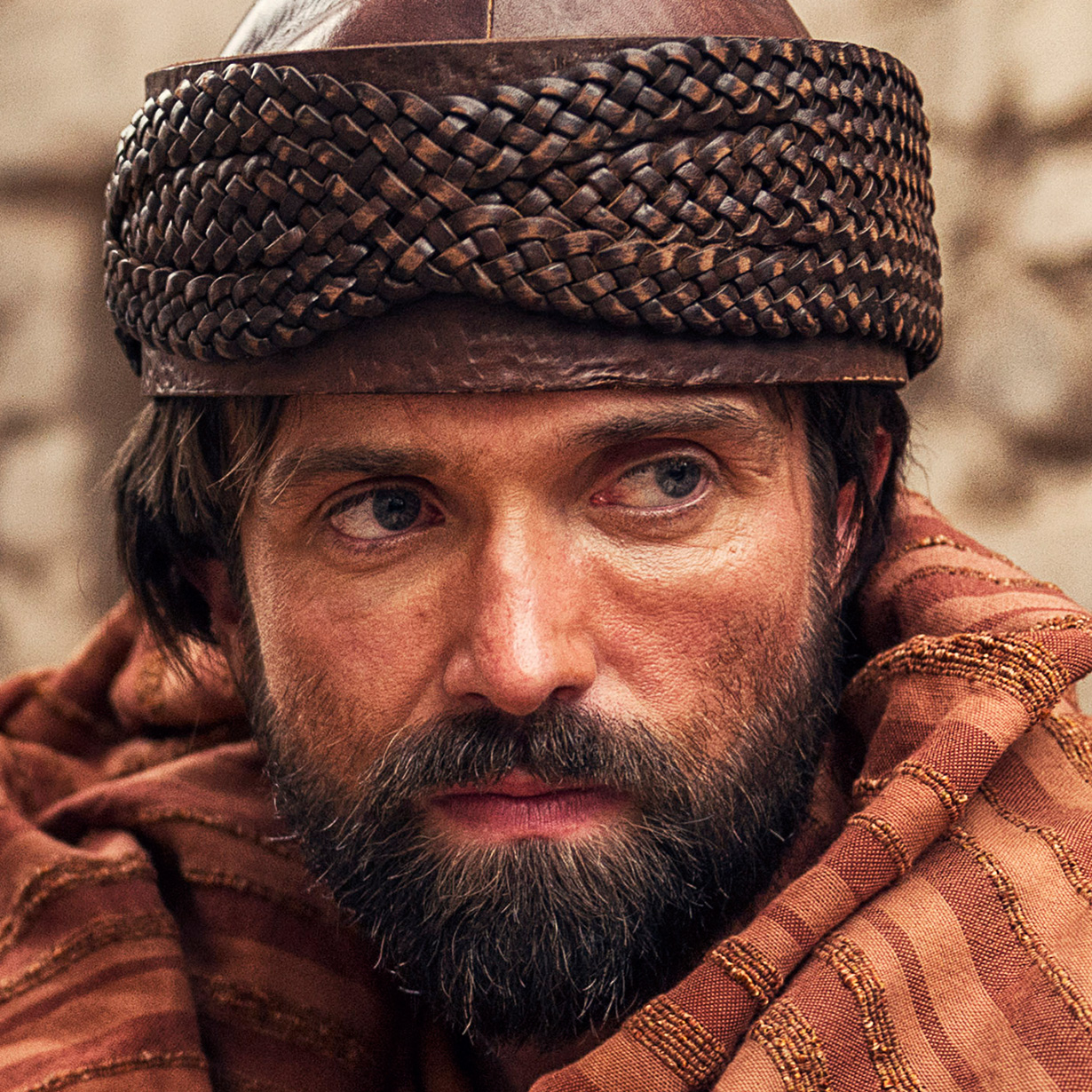
I thought the portrayal of Saul was creepy good. As I watched it, I felt his conviction, his passion. I saw a man who was utterly convinced that this fledgling movement was heretical and posed such a threat to the traditional institutions of the Jewish faith that it had to be squashed...violently if necessary. Throughout his monologues, the camera kept focusing on his eyes, and boy did those eyes cut right through the TV screen. There was one scene that was particularly effective in communicating Saul’s obsession. When Saul visits Caiaphas, who reluctantly grants him audience, Saul begins to confess his opposition to the movement. Very quickly Saul flirts with loosing emotional control. He begins to move his fingers uncontrollably, his eyes become fixated on Caiaphas’ desk, and he has trouble stopping his diatribe. At this point, Caiaphas, and the audience for that matter, knows who sits there. This scene, perhaps more than any other, visualized the passion and conviction that consumed this man—both as a persecutor and later a missionary.

There was another telling scene in the episode that I thought was effective. Early on in the episode Paul and Peter have a rhetorical sparring match. Paul tries to reason with the crowd, for he thinks they are being intellectually victimized by the Apostles. However, Peter counters by appealing to life of Christ. On the one hand, this gives us another snippet of what will come to mark Paul’s ministry. Yes, he was passionate, focused, and convicted, but he was also educated and intellectually gifted. Paul was a rhetorician, and he thrived on making arguments for his positions. For example, Paul will later find himself in the Agora of Athens reasoning with the Greek elite over the significance of Christ. On the other hand, reason alone is not the totality of the Christian faith. As exemplified by Peter, experiencing Christ is the other half of the equation. What secures the logic and reasonableness of the faith is one’s experience with Christ.


Again, there was so much artistic freedom exercised in this episode, and I can see how people may be getting fed up with how the miniseries has unfolded. Yet before one gets too bent out of shape, he or she must consider how that artistic freedom is being utilized. Simply, "How is the freedom being used to push the flow of the episode and overall miniseries, and is that flow honoring the message of the biblical text?" Overall, I cannot complain too much. By the end of this episode, we have been introduced to a man who is passionate about destroying a new movement that he believes threatens the core of the Jewish religion. Sure, none of this is in the Bible, but we have a better of understanding of the type of person who would later experience a world-altering encounter with Jesus and who would later channel those same traits for the glorification of God and edification of the Church. And that is true to the message of Acts.